
A Conversation with Julia Gordon on Housing Supply, Bringing Back the Starter Home
Sarah Brundage, President and CEO of NAAHL and the Center for Affordable Housing Lending, sat down with Senior Fellow Julia Gordon to discuss her new policy brief, The Next Playbook: Bringing Back The Starter Home, as Julia concludes her term as Senior Fellow.
In this conversation, Julia and Sarah discuss:
Why the housing supply debate too often skips over starter homes, and why that gap is especially important
Why zoning reform alone won't solve the problem
The five-part framework at the heart of the brief
Julia's outlook on what comes next for housing policy (read to the end for an announcement from Julia!)
About the State of Housing
SARAH: When we were presented with new catalytic resources to grow NAAHL’s research center with senior fellows who would bring their expertise to our thinking about affordable housing supply solutions, it created an opportunity to tap into the inimitable Julia Gordon, who has spent years at the highest levels of federal housing policy including as FHA Commissioner. Julia, thank you so much for sharing your expertise with us at NAAHL and the Center, and really the field, at such a consequential time! What drew you to this Fellowship?
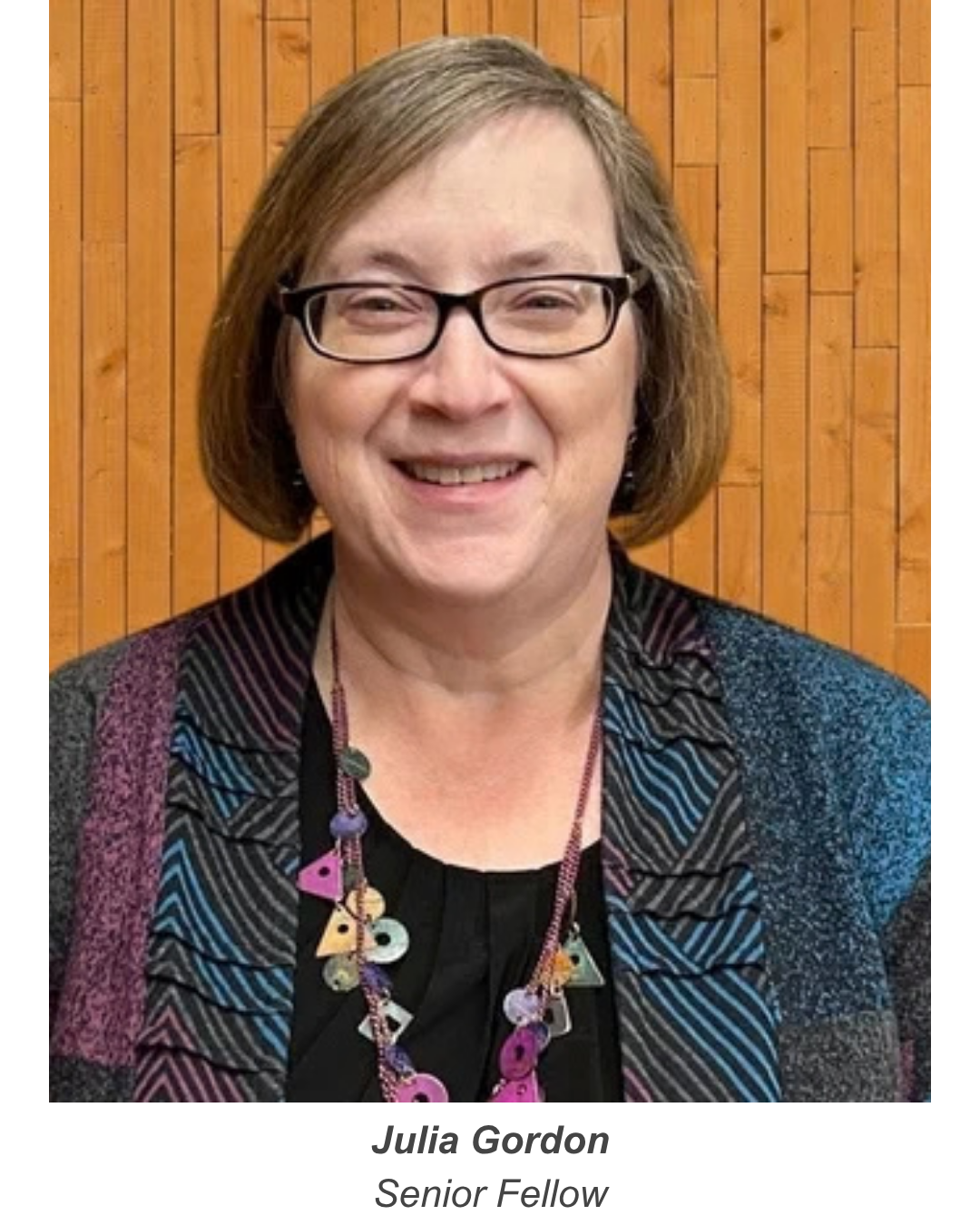
JULIA: Affordable housing has emerged – quite belatedly, in my opinion – as a top issue for policymakers on both sides of the aisle and at every level of government. It’s a rare opportunity to work across party lines and for the private and public sector to collaborate. Because NAAHL has a long track record of supporting exactly that kind of work, joining you to expand the Center’s reach felt like an exciting and timely opportunity. Like NAAHL, I’ve tried throughout my career to bring disparate parties together to focus on what really works rather than getting stuck in ideological or rhetorical foxholes.
SARAH: You’ve navigated decades of the housing market’s up and downs including the Great Recession, the post-pandemic price surge, and everything in between. And despite housing always being closely tied to the economy, it seems to finally be having a moment where more Americans – and elected officials – are aware that we haven’t been building enough housing and housing is too expensive for renters and homeowners. What stands out to you about where we find ourselves now?
JULIA: Fortunately, we’ve moved past the debate over whether we have a housing shortage and whether the government has a role to play. There is now broad agreement on the need to increase housing supply and for the government to act, as Congress just did in passing historic, bipartisan housing legislation. Now it’s time to think about nuts and bolts, no pun intended. What do we need to build, where do we need to build it, for whom, and with what tools? NAAHL and the Center want to help answer those critical questions by offering policy frameworks and specific proposals that policymakers can run with.
About Starter Homes

SARAH: Let’s be honest, it is hard not to be reactive in the policy space these days, especially in response to federal policy changes and on the heels of a new bipartisan housing bill. But we’ve been shifting our attention to some of the big questions deserving of big answers and what more we can do. At the Center, we’re thinking about all things affordable housing supply including multifamily rental production and preservation, and starter homes for homeownership. Why does the supply conversation so often skip over starter homes, and why does that gap matter?
JULIA: Your question is a good reminder that when we talk about housing supply, whether for rental or for homeownership, we need to be precise about where supply is missing. As you well know, without specific incentives to do otherwise, builders will build what’s most profitable, which today means larger homes. With affordable homes in such short supply across so many geographies, it’s easy for policymakers to throw in the towel and assume families will just have to rent longer and buy later in life. But in my view, that’s a serious mistake, because every year of delay is a year of lost equity-building. If you’ll indulge a personal story, my husband bought his first home at age 25 with an FHA mortgage in a neighborhood of modest Cape Cod-style homes originally built for GIs returning from World War II. Those were true starter homes, constructed on small lots and left unfinished so the first residents could customize them as needed. The equity my husband built made a real difference in our financial picture when we later married, had a child, and moved to a larger home. We want our daughter’s generation to have the same opportunities as he did.

SARAH: We’re finding that more Congressional offices are interested in solutions to boost housing supply, and we see a lot of focus on removing barriers to development using tools like zoning reform, permitting, and cutting red tape. All important. But your brief highlights that that’s not whole story when it comes to starter homes specifically. What’s missing from the conversation?
JULIA: Removing those barriers to development will make a real difference for supply generally, but it won’t necessarily produce starter homes. Even where smaller homes are legal to build, as I noted before, builders can usually make more money building larger, more expensive ones, so we need targeted policies that offset that opportunity cost. Also, many families have historically started their homeownership journey in condominiums, duplexes and triplexes, row houses, and manufactured homes, so policies aimed at restoring starter home inventory should look at a range of housing types beyond free-standing, site-built, one-unit, single-family properties.
Importantly, this conversation should not just be about new construction. Half of America’s housing stock is more than 40 years old, and in the northeast and Midwest that number is even higher, so keeping existing homes viable through repair and rehab is one of the most efficient ways to preserve this class of housing. We also need to help existing homes reach first-time buyers by easing the barriers that discourage older homeowners from selling when they’re ready to move and by making sure aspiring homeowners aren’t consistently outbid by cash investors.
In our policy brief, we offer a five-part framework for policies targeting the starter home gap: build more starter homes, repair existing homes, expand allowable home types, free up supply, and give aspiring homeowners first dibs. Underlying all of it is our view that the private market will not produce starter homes on its own without the public sector providing incentives and removing barriers.
SARAH: And this policy brief is meant to serve as a “state of play” to precede more policy “incubation” that the Center will convene. What do you hope comes next in this ongoing discussion?
JULIA: When you read the brief, you’ll notice that it doesn’t end with a long laundry list of policy ideas. That’s intentional. The brief is meant to set the table for a much larger conversation about how the public and private sectors can work together to increase the supply of the modest, affordable homes that we believe are so crucial for our country. We do point to some actions the federal government could take today, including implementing and funding the 21st Century ROAD to Housing Act and passing the Neighborhood Homes Investment Act, but we see those as the beginning of the conversation rather than the end. The Center intends to follow this brief by convening NAAHL members and other stakeholders and by pursuing targeted research, with deep dives into specific policy approaches at a level of detail that policymakers can really use.
About the Center and Time as a Senior Fellow (and what comes next)
SARAH: Speaking of what comes next, you’ve been instrumental in the Center planning its next chapter but now you are headed towards your next chapter! What can you share?
JULIA: This part-time Fellowship has been a wonderful opportunity, but I really caught the government bug during my HUD service, and I’m planning to return to public service. At FHA and the Office of Housing, I saw how powerful public-private collaboration can be and how much of a difference good leaders could make by helping government become more transparent and collaborative and by encouraging innovation and a focus on results. Because state level work is so critical right now, I'm excited to announce that I'm heading to New York to serve as Senior Vice President for Homeownership and Community Development at New York State Homes and Community Renewal (HCR), where I'll have the opportunity to lead on many of the issues we raise in the starter home brief.
SARAH: We’re very excited for you and to watch your inevitable accomplishments. And you headed to state government is a great reminder that we all have a role to play. Final words on what you think it will take for all of us to unlock more affordable housing supply to scale?
JULIA: Today’s polarized politics can be discouraging, but I believe in my heart that we all want to see families and communities flourish. Safe, decent, and affordable housing for all is a precondition for stability, prosperity, and success. While increasing the supply of affordable housing is a monumental task, and it’s one we will all be working on for decades to come, today’s energy gives me hope. In my view, the key to success is the kind of leadership that NAAHL and the Center are providing – bringing together all levels of government, the private sector, nonprofits, and community stakeholders to reimagine how to achieve this shared vision. Thank you for letting me be part of that work.
Julia Gordon served as FHA Commissioner and Assistant Secretary for Housing at the U.S. Department of Housing and Urban Development, a Senate-confirmed role in which she led the Federal Housing Administration and its $1.5 trillion mortgage insurance portfolio—reducing borrower insurance premiums, strengthening the insurance fund’s reserves, and improving safety and resilience standards for homeowners and rental housing. She previously served as President of the National Community Stabilization Trust and held senior roles at the Federal Housing Finance Agency, the Center for American Progress, and the Center for Responsible Lending. Gordon consults on federal, state, and local housing policy. She holds a bachelor’s degree in government from Harvard College and a J.D. from Harvard Law School.