
Something incredible happened. We passed a major bipartisan federal housing bill that features 47 housing provisions.
We have champions to thank in Banking Committee Chair Tim Scott and Ranking Member Elizabeth Warren and House Financial Services Committee Chair French Hill and Ranking Member Maxine Waters. For months, these members of Congress and their staff did something that rarely happens in Washington today—they worked across the aisle towards an ambitious piece of housing legislation.
There is no denying that it was a bumpy road to get to this point but that was to be expected. The 21st Century ROAD to Housing Act is an ambitious bill in scope and there's no quick fix when it comes to federal housing policies. Furthermore, the housing staff on the authorizing committees were largely new to their roles, cutting their teeth on a major housing package in their first Congressional session on committee. There were significant boundaries to the package set by leadership – the package wouldn’t include tax proposals, housing finance proposals, or new appropriations. At the same time, the housing package was tied to other non-housing, banking proposals that brought along separate and significant politics of their own.
Advocates leaned in and navigated the twists and turns of what the vehicle would be, what the White House wanted out of this, and which chamber would have the last pen. Even the bill’s name evolved several times. And everyone learned some lessons along the way.
But the work doesn’t stop here. As Senator Warren said on the Senate floor, “… This housing bill is big. But our housing crisis is even bigger.” She is right. So, what lessons did we learn on the road to 21st Century ROAD to Housing Act, and (yes, already) what comes next?
Housing is too important to wait.
Members of Congress, and the White House, heard what advocates have been saying: housing is too important to wait, and the American people are demanding affordability solutions. A recent poll by the Bipartisan Policy Center found that 79 percent of Americans identify the cost of housing as an extremely or very important issue. This finding is echoed by a New York Times poll that found that registered voters worry the most about affording housing.
As media and the broader public caught wind of the housing bill, partially because of the White House’s surprising points of engagement on institutional investors, the pressure to succeed in passing a bill mounted. In some ways, the forthcoming midterms created greater pressure to get a bill done, while in other ways it put a ticking clock on the bipartisan goodwill that was driving this bill to begin with. Urgency can be a friend.

Yet, in a headline-grabbing twist in the final stretch, housing policy advocates (“housers”) and America did have to wait longer than expected when the President initially refused to sign the bill into law. While we believe most Americans would agree that affordable housing is not a chip to be played, clearly stakeholders, mayors, governors, and other state and local leaders must continue to press that on Washington.
Advocates must continue to foster unexpected alliances and navigate unexpected conflicts.
The 21st Century ROAD to Housing Act is evidence that housing is a unifier. Decades of communicating and demonstrating the need for affordable housing in a range of communities to Members of Congress is paying off. The volatility of Washington will likely continue, so bipartisanship will remain a winning strategy. And it should be that way since renters and homeowners across the country need more affordable housing, regardless of whether they live in a red, blue, or purple state. Seventy-four new Members of Congress were elected to the 119th Congress. That means 74 new opportunities to educate and engage housing champions and encourage new across-the-aisle partnerships.
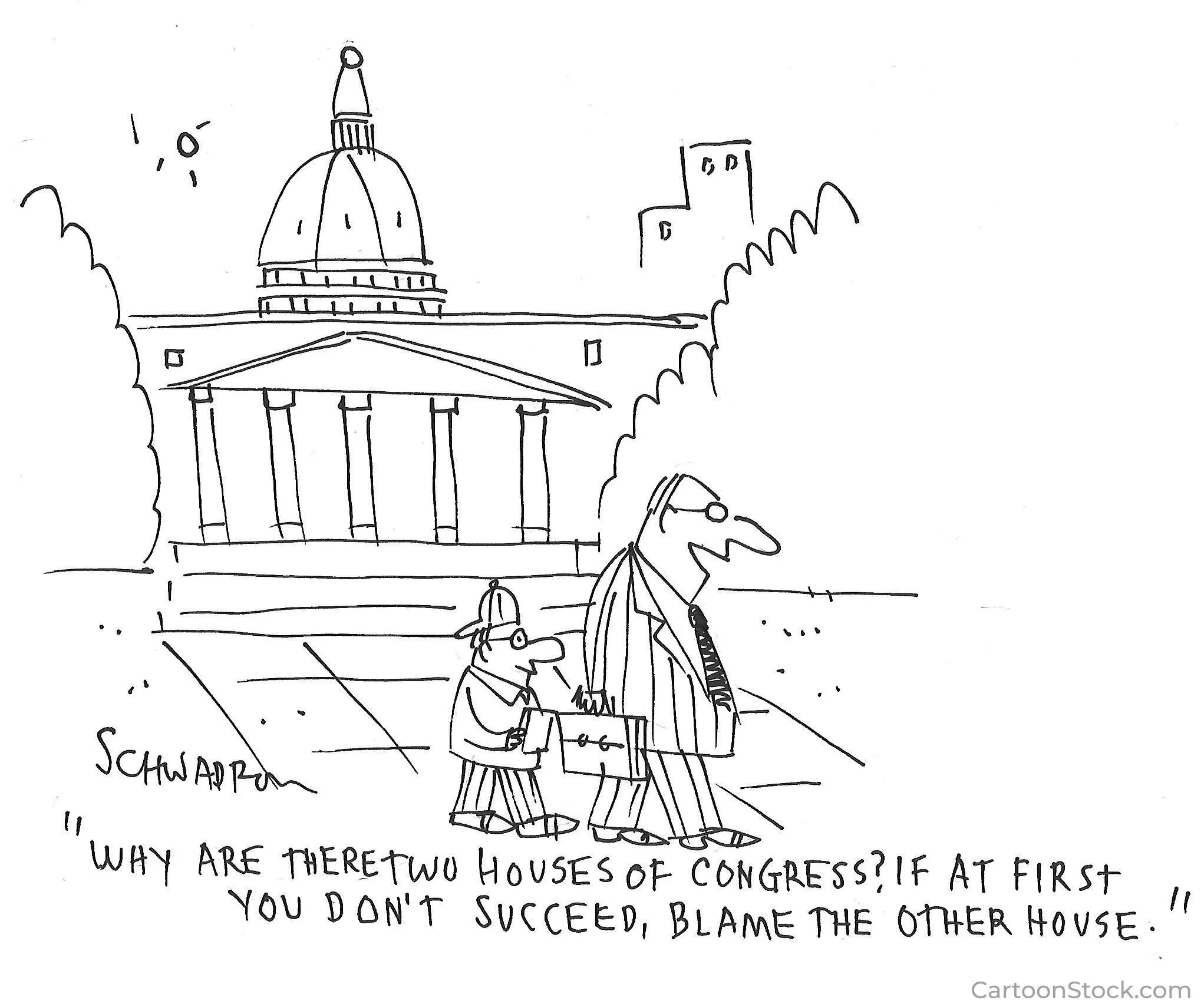
At the same time, politics are always at play and, for this bill, the process and power between the two chambers at times overshadowed what everyone was collectively working towards. Overplaying to one chamber vs. the other occasionally distracted from the unifying position that Congress should swiftly pass a comprehensive housing bill. Washington will always be Washington, but hopefully advocates and legislators can repair rather than repeat the challenging dynamics that came to play over the past ten months of chamber ping-pong.
The bill isn’t the endgame, but it’s a great start.
I often get asked why housing hasn’t been a more popular focus of federal legislators. For one, there is no silver bullet when it comes to solving the national shortage of affordable housing. Also, a lot of the solutions require state and local actions, and many solutions require spending (more on that later). Furthermore, housing solutions often take years in the making before communities (i.e. voters) really feel the benefits; a housing development can easily take more years than an elected official’s term in office.
All this underscores why it is so significant that Congress put in the many months of labor to pass a bipartisan housing bill. Does it provide all the solutions communities need? Of course not, but as often is the case in great compromises, “don’t let perfect be the enemy of the good.” And this bill is good.
For NAAHL, our non-negotiable was that the bill included raising the public welfare investment (PWI) cap, which will up the opportunity for more private investment in affordable housing. Other critical provisions include:
Updating and reauthorizing the HOME Investment Partnerships program, the only federal block grant program exclusively for affordable housing supply;
Authorizing a Whole-Home Repairs program to preserve existing homes with repair needs;
Modernizing rural housing programs and providing a path to preserve hundreds of thousands of affordable rural units;
Cutting red tape and streamlining environmental reviews for homes constructed with funds from the Department of Housing and Urban Development (HUD) and Department of Agriculture (USDA);
A seven-year authorization of the PRICE program, which helps maintain manufactured housing communities – an under-appreciated part of our affordable housing stock; and
A three-year authorization of the Community Development Block Grant-Disaster Recovery (CDBG-DR) program, the primary federal program that supports long-term recovery after major disasters.
Federal policy and advocacy isn’t for the impatient. Many of these provisions have been in the works for years, and legislators and stakeholders are right to celebrate this tremendous bipartisan win for affordable housing and communities nationwide.
Solving the housing crisis has a price tag – but the cost of inaction is far greater.
If we really want to make a dent in the national shortage of affordable housing, we’re going to need to think bolder and Congress will need to spend money to help renters and homeowners. The reality is we can’t solve the national shortage of affordable housing without spending money, whether it’s through this bill or housing bills yet to come.
First, for large swaths of the 21st Century ROAD to Housing Act to benefit communities as intended, many of the programs in the bill will need new appropriations.
Furthermore, as we think about what comes next after this bill, we can’t be limited to no- or low-cost solutions. The reality is that the market is not producing enough affordable housing on its own – as evidenced by a growing share of renters and owners paying unsustainable shares of their incomes towards housing. And Congress actually has been subsidizing housing for nearly 40 years through the mortgage interest deduction which costs around $25 billion a year in recent years.
Think of it this way, cost of living is the top issue for voters and housing is the most expensive item in a household’s monthly budget. Yet, HUD’s discretionary budget makes up roughly 0.9 percent of the overall United States federal budget.
And there is also a cost to inaction. For poorer Americans, the consequences of affordable housing are severe, and one economic shock can cause eviction and homelessness. Moving up the income ladder, families have stabler housing, but increased housing costs crowd out spending on other necessities and prevent families from building savings. Many families simply can’t get onto the homeownership ladder, locking them out of the main source of wealth-building for most American families.
When we think of the next housing package, we can’t be limited to solutions that nibble around the edges. Norms in Washington are being thrown out the window every day, so why shouldn’t housers think bigger and bolder? Everything should be on the table. The 21st Century ROAD to Housing Act is a meaningful step—and the next one should be bigger.
Passing this bill is just the start. Implementation will determine this bill’s legacy.
We’ve learned a hard lesson in recent years: passing legislation is not a win for communities if they never receive the benefits as intended by Congress because of rescissions, obstruction, or litigation.
Implementing programs requires capable government, and it is tough work even with fully-staffed federal agencies. In order for voters to feel the benefits of the 21st Century ROAD to Housing Act, HUD will first need to successfully implement the 47 sections of the bill. We’ve produced an implementation guide to show what that will take. Spoiler: the bill prescribes more than 120 implementation actions and more than 70 percent of them are for HUD.
Unfortunately, HUD has lost a huge part of its federal employees from reductions-in-force (RIFs) and other pressure campaigns to encourage early retirements or departures. As anyone who has spent time in the Weaver building (HUD’s headquarters) knows, the agency has needed more resources across many administrations, and now HUD has lost more than 1,600 full-time employees, roughly 30 percent of its workforce.
HUD’s ability to execute this bill is not a measure of the agency’s value; it’s a reflection of the limited capacity it has been left with after historic cuts to public servants. And this concerning loss of staff at HUD has implications beyond this bill’s implementation. Congress needs a functioning HUD to implement this legislative win; America deserves and needs a highly functioning federal housing agency to serve communities year-round.
In closing, federal policy requires patience and persistence. A win like the 21st Century ROAD to Housing Act is decades in the making, and legislators and stakeholders deserve to celebrate this moment. But there remains a long road ahead of us (the puns are endless), and now housing advocates must continue our work to help communities with a few more lessons learned under our belts.
Sarah Brundage
President & CEO